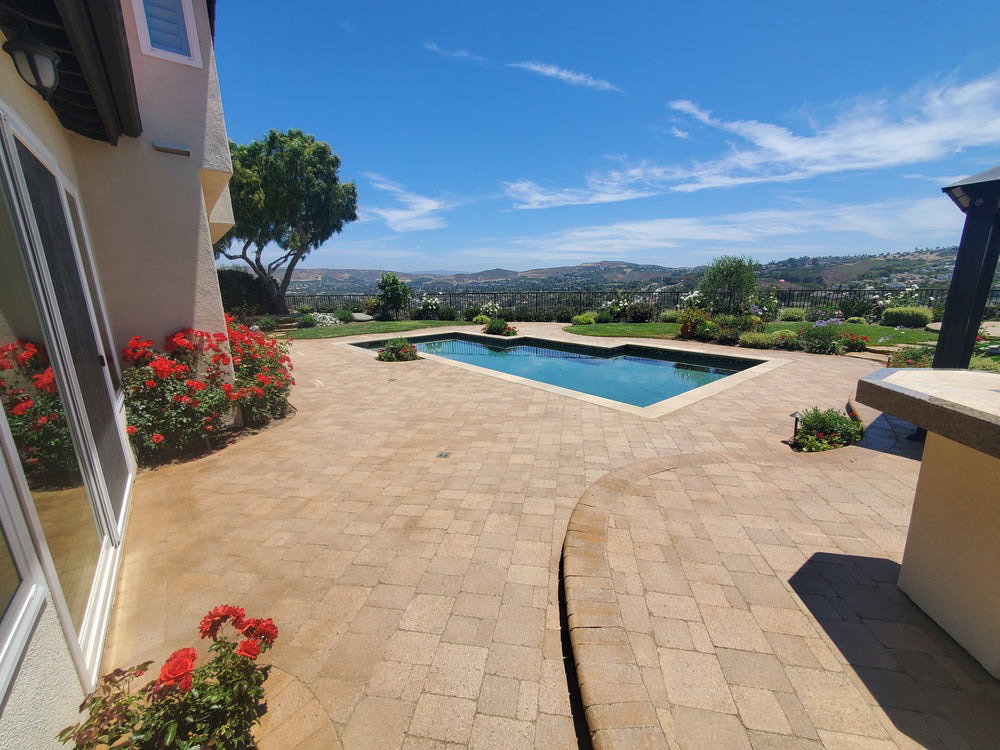
Orange County satin finish floors
Floor Polishing Services and Satin Finish in Orange County, California
Satin finish is the soft sheen most Orange County homeowners actually want when they ask for polished concrete or polished stone. Light reflection without overhead glare, smooth to the touch, and easier to live with than a high-gloss mirror.
We finish satin floors on concrete, marble, limestone, travertine, and terrazzo. Stops at 400 grit on the diamond progression.
years in construction and surface work
Google rating from local customers
California contractor license
Google reviews
Trust has to show up before the estimate.
5.0
Google rating from local customers
17
Google reviews and counting
Victoria
Orange County
★★★★★
"Our kitchen counter was pitted from water damage. Vince and Derrick fixed the granite and sealed everything at a reasonable price."
Google reviewJohn D.
Orange County
★★★★★
"Concrete patio, tile walkways, and driveway. Cleaning, patching, recoloring. Three days, and they aced it all."
Google reviewJudi Harris
Orange County
★★★★★
"Honest, hard working. Vince and Gio were punctual, neat, and surpassed our expectations."
Google reviewFrank Warren
Laguna Niguel
★★★★★
"Driveway was getting cloudy and chipping. Vince came out multiple times and even made a video showing me how to maintain it."
Google reviewMike Porter
Orange County
★★★★★
"Competitive quote, owner was hands-on the entire time, fixed every detail we pointed out."
Google reviewLaurie C.
Orange County
★★★★★
"Concrete restored and stained. Vince and his crew were professional, reliable, and always on time."
Google reviewMission Viejo location
Satin Finish from a local Orange County crew.
We are based at 23881 Via Fabricante, Suite 521 in Mission Viejo. Most satin finish work happens nearby in Lake Forest, Laguna Niguel, Rancho Santa Margarita, Irvine, Newport Beach, San Clemente, Tustin, and homes across Orange County.
Read the Google reviews on this page before you decide who should look at your surface.
What we do
Stop at 400 grit. Skip the mirror finish.
On the standard scale, a satin finish (Level 2) is achieved by polishing through 100 grit, 200 grit, and finishing at 400 grit resin-bond diamond pads. Push past it to 800 grit and you are in semi-gloss territory.
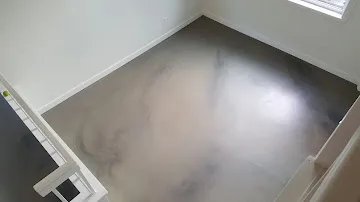
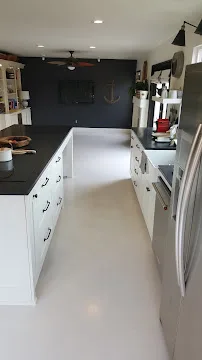
A 400-grit satin floor catches soft side light from across the room but no overhead glare. It hides scuffs, footprints, and pet claw marks better than higher gloss levels.
The difference
Satin works on concrete, stone, and overlays.
Concrete and terrazzo follow the standard 100/200/400 sequence. Marble and limestone reach satin around 220 to 400 grit with metal-bond and resin-bond diamonds.
On concrete we finish with a lithium silicate densifier and a stain guard. On stone we use a penetrating impregnator that does not change the sheen.
Learn your surface
The better you understand the material, the better it holds up.
Quick reads on how satin finish actually works for orange county homes, before you spend money on the wrong fix.
Soft sheen without overhead glare
Hides footprints and scuff marks
Stops at 400 grit on the progression
Works on concrete, marble, and limestone
Densified and stain-guarded for daily use
Easier to live with than a mirror finish
How we work
A clear plan before the machines come out.
01
Walk the slab and pick the target sheen
Sheen preferences vary. Some people want barely-there matte, others want the soft satin glow that just catches light. We polish a 2-by-2-foot test patch at 400 grit so you can see exactly what your slab will look like before we commit. We also check for cracks, patches, and existing coatings that would change the approach.
02
Strip and grind to base
Old sealers, paint, mastic, or carpet glue come off first. We grind with coarse 30 to 50 grit metal-bond diamonds, then 80 to 100 grit, until the slab is flat, clean, and ready for refining. For a satin conversion from existing high-gloss, we start at the grit level above where we're going (usually 200 to 220) and work down.
03
Densify and refine to 400
A lithium silicate densifier (Prosoco LS, Ameripolish 3DHS, or Consolideck LS) goes on at this stage on concrete. It penetrates and hardens the surface chemically. We then refine through 100 grit, 200 grit, and finish at 400 grit resin-bond diamonds. On stone we use the corresponding metal-to-resin progression for that material.
04
Stain guard and final pass
A topical stain guard goes on after final polish to give the surface temporary protection against spills (it absorbs into the densified pores instead of sitting on top). On marble or limestone we apply a penetrating impregnator that doesn't add sheen. We do a final burnish pass with a 400-grit hog's hair pad to set the satin uniformly across the room.
Orange County homes
Satin finish floors for Orange County homes and garages.
Newer Irvine, Portola Springs, and Great Park homes pair satin polished concrete with stained or integrally-colored slabs. Older Newport Beach, Laguna Beach, and Costa Mesa homes often want satin conversions from a high-gloss installed years ago.
Garage and basement satin work happens in Mission Viejo, Lake Forest, Aliso Viejo, and Tustin. Satin on a garage slab handles oil and brake fluid better than epoxy and never peels.
Questions
Straight answers before the estimate.
What's the difference between honed, satin, and polished?
Honed is the matte stopping point at 100 to 200 grit. The surface is flat and smooth but has zero sheen, like a chalkboard. Satin is the next step up at 400 grit, with a soft low-sheen glow that catches side light. Semi-gloss is 800 grit with clearer overhead reflection. High-gloss is 1500 to 3000 grit, a true mirror. Satin sits in the most practical zone for residential floors because it looks finished without showing every footprint.
Does satin show fewer scratches and footprints than high-gloss?
Yes, significantly. The reason is light reflection. High-gloss surfaces reflect light at sharp angles, which makes any scratch, footprint, or scuff visible by contrast. Satin diffuses reflected light, so the same scratch is much harder to see. For homes with kids, dogs, sandy shoes, or just normal life, satin is the lower-stress choice. It still cleans the same way, it just doesn't broadcast every imperfection.
Is satin polished concrete slippery when wet?
Less slippery than high-gloss polished concrete and less slippery than ceramic tile. The 400-grit surface still has microtexture you can feel with bare feet, which gives traction. For kitchens, bathrooms, mudrooms, and outdoor satin work we can add an anti-slip topical conditioner that increases friction further without changing the look. Pure water on satin concrete is fine for most household areas.
Will the satin finish wear off over time?
The finish itself is the concrete, not a coating, so there's nothing to peel or wear away. The densifier and stain guard on top do wear and need refreshing. In a typical OC home we recommend a re-burnish on a regular interval to refresh the satin sheen, plus a stain guard reapplication in high-traffic areas. The actual polish geometry of the floor is long-lasting.
Can satin finish go on a stained concrete floor?
Yes, and it's one of the more popular combinations we install. The stain (acid or water-based dye) goes down first during the polishing process, color penetrates the slab, then we polish to satin. The result is a colored floor with permanent finish (no sealer to peel) and a soft sheen. Common in modern OC residential builds in Irvine and Portola Springs.
How long does the project take and can I be in the house?
A typical room runs a few days. Day one is grinding and densifier. Day two is refinement up through the grits. Day three is stain guard and burnish. Our equipment is HEPA-vacuumed, so dust is minimal compared to old-school dry grinding. You can usually stay in the house if we're working a contained area. Light foot traffic the same day as final polish, full use the next day after stain guard.
Related
Other floor sanding & polishing services in Orange County.
Floor Sanding & Polishing
Concrete Polishing
Concrete polishing in Orange County, California for garages, homes, retail floors, offices, and warehouses. Diamond-honed concrete with a finish that holds up to real use.
Floor Sanding & Polishing
Marble Polishing
Marble polishing in Orange County, California for floors, counters, showers, and stone surfaces. Cleaning, honing, polishing, and sealing that bring marble back.
Floor Sanding & Polishing
Granite Polishing
Granite polishing in Orange County, California for kitchen counters, bath vanities, and stone floors. Restore shine and protect the surface against daily use.
Floor Sanding & Polishing
Travertine Polishing
Travertine polishing in Orange County, California for floors, showers, patios, and pool decks. Honing, cleaning, hole filling, and sealing for stone that takes daily use.
Floor Sanding & Polishing
Countertop Polishing
Countertop polishing in Orange County, California for granite, marble, quartzite, travertine, and natural stone counters. Refresh counters without replacement.
Floor Sanding & Polishing
Natural Stone Polishing
Natural stone polishing in Orange County, California for marble, granite, travertine, and limestone surfaces. Honing, polishing, and sealing tuned to the stone.
Floor Sanding & Polishing
Countertop Color Staining
Countertop color staining in Orange County, California for kitchen and bath counters. Color the surface and seal it without the cost of replacement.
Have a satin finish project you are not sure about?
Send a photo. We will tell you what we see and whether it belongs on our schedule.