What Is Acid Stain, Chemically?
Acid stain isn’t paint, and it isn’t dye. It’s a mildly acidic solution carrying dissolved metallic salts (iron, copper, or cobalt compounds are common) that gets worked into the surface of the concrete. Once the acid opens the tight, dense skin at the top of the slab, those metallic salts reach the free lime inside the concrete: calcium hydroxide left over from the cement’s original chemical reaction. The salts and the free lime react and form new, insoluble mineral compounds that lodge themselves inside the pores of the concrete.
That’s the whole trick, and it’s why acid stain behaves so differently from anything you’d brush on. The color isn’t sitting on the surface waiting to peel or wear off. It’s a chemical product of the concrete itself, embedded below the surface. That’s also why the color reads as translucent rather than flat. Light passes through the mineral deposits and picks up the natural variation of the concrete underneath, the way it passes through the surface of real stone. Manufacturers describing this process, including Sika and Euclid Chemical, both point to the same mechanism: acid opens the surface, metallic salts bond with the free lime, and the result is a permanent part of the slab rather than a coating on top of it.
That permanence cuts both ways. A film-forming coating can be stripped and redone if you don’t like the outcome. Acid stain can’t. Once the metallic salts have bonded with the free lime, that reaction has already happened inside the concrete. You can change the sealer on top, and you can layer a second stain application to shift the tone, but you can’t undo the base reaction. That’s a real reason to slow down on the color decision before the first pass goes on, not after.
Why Does Acid-Stained Concrete Come Out Mottled Instead of Solid?
If you’ve looked at a color chart for acid stain and pictured your driveway coming out that exact shade, it’s worth resetting that expectation early. Acid stain reacts with your specific piece of concrete, and concrete is never chemically uniform. The cement content in the mix, the water-to-cement ratio, how the slab was finished, its age, its porosity, how much it’s carbonated over the years, how it was cured, any surface contamination, any patched areas, how hard the trowel pressed during finishing, how much moisture is in the slab right now, and whether the concrete already has integral color mixed in. Every one of those variables changes how much free lime is available at the surface and how the acid reaches it.
That’s why a sample chip is a starting point, not a promise. Two driveways poured the same year by the same crew can still take stain differently if one got a harder trowel finish or sat exposed to more weather. A reputable contractor tests a small area of your actual slab in the actual product before committing to a full job, because that test is the only way to see how your concrete, specifically, will respond.
What Does Acid Stain Actually Show On a Slab?
Here’s a distinction that gets lost in a lot of sales pitches: acid stain accentuates the concrete’s real condition. It does not conceal it. Hairline cracks, larger cracks, control joints, trowel marks, burnish lines, exposed aggregate, ghosting left behind by old tile adhesive, saw cuts, old footprints pressed into wet concrete decades ago, and the subtle lines where one pour section met another. All of it tends to show through more clearly once the surface is stained, not less.
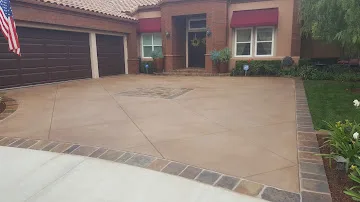
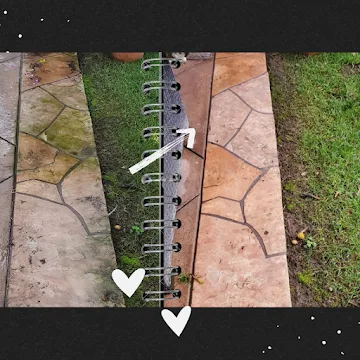
For a lot of homeowners that’s the appeal. A variegated, earth-toned surface with visible character reads as natural, closer to worn stone than to a factory floor. But if the goal is a uniform, flawless-looking surface that hides an imperfect slab, acid stain is working against that goal by its nature, and it’s worth knowing that before committing to it. An overlay or an opaque stain, discussed briefly below, is built to hide those same features instead of highlighting them.

What Has to Come Off the Slab Before Staining Can Work?
Because the acid needs to reach bare concrete and bond with the free lime underneath, anything sitting between the acid and the slab blocks the reaction. That includes old epoxy coatings, acrylic sealers, paint, glue or mastic residue from old flooring, wax, silicone, oil and grease stains, tire residue, leftover curing compound from the original pour, form-release agent, dense polymer patch material, heavy efflorescence (the white mineral bloom that shows up on damp concrete), and weak, dusting laitance at the surface.
Every one of those has to be identified and dealt with before staining begins, which is a big part of why an inspection comes before a quote rather than after one. Skipping this step doesn’t just produce a patchy result. It can mean the stain never reacts at all in the affected areas, leaving a visible outline of wherever the contamination sat, long after the rest of the slab has taken color evenly.
Some of these are obvious to the eye: old paint, a visible oil stain from a parked car. Others aren’t. Curing compound sprayed on at the time of the original pour can be invisible decades later and still block a stain reaction just as effectively as a fresh coat of sealer. That’s part of why a water-based porosity check and, where needed, mechanical preparation come before staining rather than a straight “clean and go” approach.
Why Do Patched Areas Take Stain Differently Than the Rest of the Slab?
If your slab has been patched (a crack repair, a spot where a pipe was replaced, a section poured to fix settling), expect that patch to take color differently than the surrounding concrete. Patch material is rarely the same mix as the original pour. It usually has different polymer content, different porosity, and a different amount of available calcium for the acid to react with. The patch can come out darker, lighter, or in some cases barely take color at all, even sitting right next to original concrete that stains beautifully.
If a uniform, even look matters more to you than natural variation, acid stain on a heavily patched slab is fighting an uphill battle. In that situation a concrete overlay (a new stainable surface poured over the old one) or an opaque stain, which uses a pigmented film instead of a chemical reaction, is usually the better tool for the job.
How Is Acid Staining Actually Done, Start to Finish?
A real acid-stain job runs through roughly a dozen distinct steps, and skipping any of them is where most disappointing results come from.
- Inspect the slab. Check porosity, condition, existing coatings, cracks, and contamination before anything else happens.
- Strip contaminants. Remove sealers, oils, curing compound, and anything else blocking the acid from reaching bare concrete.
- Run a test patch. Apply the actual product to a small, inconspicuous area so the color chart gets checked against your real slab.
- Prepare the surface mechanically if needed, without over-grinding to the point of polishing the surface closed instead of opening it.
- Repair cracks and joints appropriately. A crack that’s still moving needs a flexible treatment, not a rigid patch that will just crack again.
- Apply the acid-reactive stain in a controlled, even pass.
- Let the reaction happen. This dwell time is when the metallic salts are actually bonding with the free lime. Rushing it changes the outcome.
- Layer a second application if the color or product calls for it.
- Neutralize the acid with an alkaline wash so the corrosive reaction stops.
- Rinse thoroughly and confirm the surface has returned to a neutral pH rather than assuming it from how clean the slab looks.
- Let the slab dry completely.
- Apply a sealer matched to the environment, and on interior floors that see heavy foot traffic, a sacrificial finish on top of that.
Miss step 3 and you get an unpleasant surprise on color. Miss steps 9 and 10 and you get a sealer that fails prematurely because leftover acid keeps reacting underneath it.
Is Acid Stain the Only Way to Color Existing Concrete?
No. Acid stain is one of four distinct ways to put color into or onto concrete, and they work by genuinely different mechanisms. Water-based penetrating stain uses pigment, often UV-stable iron oxide, suspended in water rather than triggered by an acid reaction. It penetrates the pores and offers a wider, more predictable color range because it isn’t dependent on how much free lime happens to be available. Concrete dye uses much smaller colorant molecules that penetrate deep and fast, producing vibrant color mostly used on interior and polished floors. Opaque or solid-color stain is a pigmented polymer film rather than a reaction. It can hide inconsistency the way acid stain can’t, at the cost of being a film that can eventually peel or wear through and need recoating.
Choosing the right one of these four for your own concrete staining project comes down to your slab’s condition, whether it’s indoors or out, and how much variation you want to see.
Why Does Acid Stain Need to Be Neutralized, and What Happens If It Isn’t?
Acid stain is, by definition, a corrosive chemical process. The solution can cause burns and eye or respiratory irritation if handled without the right precautions, which is one of the plainer reasons this isn’t a casual weekend project. After the reaction runs its course, the acid has to be neutralized, typically with an alkaline wash, and then rinsed until the surface is verified at a neutral pH, not just visibly clean. ASTM D4262, the standard test method for pH of chemically cleaned or etched concrete surfaces, exists specifically because residual acid that isn’t fully neutralized and rinsed away can undermine the adhesion of whatever sealer goes on top weeks or months later, long after the job looked finished.
The rinse water itself also isn’t something to send down a storm drain. Runoff from an acid-etched or acid-stained surface carries residual chemicals and needs to be contained and handled appropriately rather than allowed to run off the property. This is one of the more overlooked parts of the process, and it’s a fair question to ask any contractor: how do you handle the water?
South Coast AQMD Rule 1113 also governs what can go on top of the stain once it’s neutralized and dry. The region’s architectural-coating rule sets VOC limits by category, including stains and the sealers applied over them. It’s a separate concern from the acid chemistry itself, but the two are connected: a job that skips proper neutralization can undermine even a fully compliant, well-chosen sealer’s ability to bond.
Does Orange County Weather Change How Acid Staining Is Done?
The right time to do this work is a substrate and weather condition, not a date on a calendar. In Orange County summers, direct sun heats an exterior slab well above the surrounding air temperature, which speeds up the acid reaction and the evaporation rate beyond what’s ideal. The practical response is working early in the day, keeping the area shaded, and checking the actual slab temperature rather than trusting the forecast. Coastal mornings bring a different problem: marine layer and overnight condensation can leave a slab damp in a way that isn’t obvious just by looking at it, so dew point gets checked rather than assumed. In the wetter months, a saturated exterior slab slows curing and can trap moisture under a sealer applied before the concrete has fully dried, setting up problems that show up later as cloudiness or peeling.
None of this changes what acid stain is or how it reacts. It changes when and how carefully the work gets scheduled.
Is Acid Stain the Right Call for Your Slab?
Acid stain makes sense on bare, sound, porous concrete: older slabs once contaminants are removed, newly cured concrete, interior floors, patios, walkways, pool decks paired with the right traction-rated sealer, and even integrally colored concrete looking for more depth. It doesn’t make sense as a way to hide a badly cracked or heavily patched slab, and it isn’t a project to run yourself given the corrosive chemistry and disposal considerations involved.
If you’re weighing acid stain against water-based stain, dye, or an overlay for your own driveway, patio, or floor, our concrete staining team can walk your specific slab and tell you honestly which of the four approaches fits it, including whether acid stain is even a good match before any color gets picked. Call (949) 510-4182 to set that up.