
Concrete Sealing in Orange County by The Floor Maintenance Company

Orange County concrete sealing

Concrete Sealing in Orange County, California

Certified for this work

Concrete sealing means two different things. A penetrating repellent soaks into the slab and repels water from the inside. A film-forming sealer sits on top and changes how the surface looks and feels. We help Orange County homeowners figure out which one their driveway, patio, pool deck, or garage floor actually needs.

Send photos of the surface. We'll tell you what condition it's in, what's likely already on it, and whether sealing is the right next step or something else needs to happen first. If the answer is 'this isn't a sealing job,' we'll say that too.

45+

years in construction and surface work

5.0

Google rating from local customers

#661604

California contractor license

ConcreteStoneTile and groutCountertopsGarage floorsMaintenance

Mission Viejo location

Concrete Sealing from a local Orange County crew.

We are based at 23881 Via Fabricante, Suite 521 in Mission Viejo. Most concrete sealing work happens nearby in Lake Forest, Laguna Niguel, Rancho Santa Margarita, Irvine, Newport Beach, San Clemente, Tustin, and homes across Orange County.

Read the Google reviews on this page before you decide who should look at your surface.

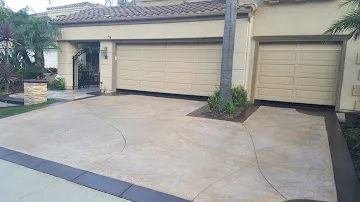
Sealed and polished concrete driveway in Orange County

What we do

Sealing protects concrete. It doesn't replace concrete.

A sealer is a protective layer, not a repair. It won't waterproof a slab against standing water or a leaking joint, it won't stop a crack from moving, and it won't hide spalling or a settled section. What it does is reduce how much water and staining material get into or through the surface, and in the case of film-forming products, change the sheen and color depth of the concrete underneath.

That distinction decides the order of operations. Cracked, spalled, or unstable concrete needs to be addressed before a sealer goes on. Sound concrete with dirt, fading, or an old worn-out sealer is a straightforward sealing job.

Stained concrete patio with a flagstone-style cut pattern under a film-forming sealer
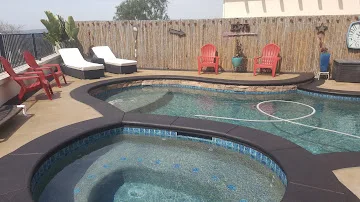
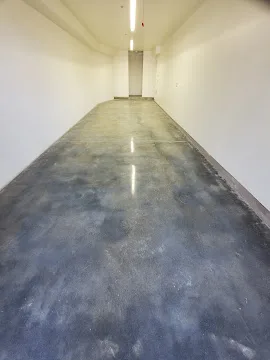
Concrete pool deck sealing project in Orange County Sealed interior concrete floor with a low-gloss finish

The difference

Two different jobs share the word sealer.

A penetrating sealer soaks into the pore structure of the concrete and reacts or bonds within it. It doesn't sit on top, so the surface still looks like concrete. It stays vapor-permeable, which means moisture inside the slab can still escape.

A film-forming sealer leaves a thin coating on the surface. That's what gives stamped and stained concrete its wet look or gloss, and it's also the layer that can whiten, peel, or wear through if it's applied wrong or asked to do a job it can't.

The decision points

Know what the slab needs before you choose a sealer.

Penetrating repellent or film-forming sealer?

Silane and siloxane repellents

Silane molecules are small. Small enough to penetrate deep into the concrete and bond within it. The surface keeps its natural look and stays vapor-permeable. Siloxane molecules are larger and penetrate less deeply; blended products combine both. Either one reduces how much liquid water and chloride the concrete absorbs, which is why they're a common choice for exterior driveways, walkways, and parking structures. Neither one waterproofs the slab. Rain still beads and rolls off, but an active crack or a joint under hydrostatic pressure will still let water through.

Acrylic and other film-forming sealers

Acrylic sealers are the standard choice over stamped and stained exterior concrete because they enhance color and let you choose a sheen from matte to high gloss. Water-based and solvent-based versions cure differently and aren't always interchangeable. ARDEX CG Concrete Guard, a high-solids waterborne acrylic from the ARDEX line we're factory-trained on, is one option we use here, not the only acrylic sealer on the truck. They're recoatable, but they have real limits: lower chemical resistance than a coating like epoxy, some scratching and softening from solvents, and a tendency to go slippery when wet at higher gloss levels.

Driveways carry the heaviest decision

Driveway sealing is where the wrong choice shows up fastest. A driveway takes direct sun, vehicle weight, hot tires, and whatever drips out of the engine bay. A penetrating silane or siloxane repellent is a strong fit here because it won't build up a film that hot tires can lift or mark, and it keeps the concrete breathing instead of trapping moisture under a coating. If the driveway is stained or you want a color change along with protection, that's a different conversation covered by our concrete driveway staining and sealing service. If the driveway has active cracking, settlement, or spalling, that needs to go through driveway repair first, because a sealer will not stop a crack from moving or a section from settling further.

Patios, pool decks, and garage floors don't want the same sealer

A shaded patio with standing planters and irrigation overspray has different needs than a driveway in full sun, and a garage floor with tire contact and occasional chemical spills is different again. Pool decks add barefoot traction and chlorine exposure to the list. We look at sun exposure, drainage, foot or vehicle traffic, and what the surface already has on it before recommending a sealer family for that specific area. A garage floor that needs real chemical and abrasion resistance is often better served by the full coating systems covered on our garage flooring page.

What we check before we recommend anything

Most sealing failures trace back to a skipped diagnosis step, not a bad product. We check whether the slab already has a sealer or coating on it, whether there's oil or other contamination that needs to come out first, how porous the concrete is, and whether the surface is dry enough to take a sealer without trapping moisture underneath it. A slab that's too far gone for a simple reseal, because of a thick failing coating or heavy contamination, usually needs concrete grinding to get back to a clean surface before anything new goes on. If you are already looking at a sealer that went milky, our write-up on why concrete sealer turns white or cloudy walks through the causes. White powder that keeps coming back is usually a different problem, efflorescence, and sealing over it without fixing the water source just moves it around.

Learn your surface

The better you understand the material, the better it holds up.

Quick reads on how concrete sealing actually works for orange county homes, before you spend money on the wrong fix.

Why a sealer turns white or cloudy after it rains

Can you seal a driveway that's already sealed?

Why 'low VOC' isn't a performance promise

Silane for driveways vs. acrylic for patios: picking the right family

What actually causes hot tire marks on a sealed driveway

When grinding has to happen before sealing

How we work

A clear plan before the machines come out.

01

Photos and a look at the surface

Send photos of the area, including any spots that look discolored, peeling, or already sealed. That tells us whether we're looking at a straightforward reseal or a slab that needs more diagnosis.

02

Diagnose what's already there

We check for existing sealer or coating, contamination, porosity, and moisture before recommending anything. A slab with a failing old sealer usually needs that removed first, not a new coat on top of it.

03

Choose and apply the right sealer

Penetrating repellent or film-forming sealer, matte or gloss, water-based or solvent-based: the choice comes from the surface and how it's used, not a single default product for every job.

04

Cure time and a maintenance plan

We walk you through when the surface can take foot traffic and vehicles, what to avoid while it cures, and the signs that mean it's time to reseal rather than wait for a full failure.

Orange County homes

Concrete sealing for Orange County homes.

Orange County falls under the South Coast Air Quality Management District, which regulates the VOC content of architectural coatings under Rule 1113. Reactive penetrating sealers are capped at 350 grams per liter, and waterproofing concrete and masonry sealers at 100 grams per liter. One distinction worth knowing: Rule 1113's own "Driveway Sealer" category is written specifically for worn asphalt driveways, not concrete, so a concrete driveway sealer is regulated under a different category entirely. Compliance with Rule 1113 tells you what's in the can. It doesn't tell you whether the slab was dry enough, whether the old sealer underneath is compatible, or whether the weather cooperated on install day. Good prep and the right product for the job still matter more than the label.

Coastal mornings bring a marine layer that leaves concrete damp longer than it looks, and a sealer applied over that hidden moisture is a common cause of whitening and cloudiness. Inland, a driveway slab in direct August sun runs well above air temperature, which shortens the working time on faster-curing products and can leave lap lines if a section is worked too slowly. We plan around the actual weather and slab condition on the day, not a generic seasonal calendar.

Concrete pool deck sealing project in Orange County

Questions

Straight answers before the estimate.

Is sealing concrete actually worth it?

Usually, yes. Sealing cuts down how much water, oil, and staining material soaks into the concrete, and it's a normal part of maintaining a driveway, patio, or pool deck in Orange County. It isn't a fix for damaged concrete and it isn't waterproofing. Sound concrete with dirt or a worn-out old sealer is a good candidate. Cracked or settling concrete needs repair first.

Can I seal my own concrete driveway?

A small, sound slab that's never been sealed before is realistic for a basic acrylic sealer applied by a careful homeowner. Where it gets harder is diagnosis: knowing whether there's an existing sealer that needs to come off first, whether the slab is dry enough, and picking a product that's compatible with what's already there. Those are the details behind most whitening and peeling problems.

What's the best sealer for a concrete driveway?

There isn't one universal answer. A penetrating silane or siloxane repellent is a strong fit for a plain driveway because it won't build a film that hot tires can mark and it keeps the concrete able to release moisture. A film-forming acrylic sealer makes more sense if you want a wet look or gloss, most often on a stained or stamped driveway. We match the product family to the surface, not the other way around.

Why did my concrete sealer turn white or cloudy?

The most common causes are moisture trapped under the sealer, rain before it finished curing, applying it too heavy or in multiple thick coats, cold or humid conditions during application, or putting a new sealer over an old one it isn't compatible with. Fixing it depends on which of those happened and whether the sealer is water-based or solvent-based. Sometimes a controlled solvent treatment brings the clarity back, and sometimes the sealer has to be stripped and reapplied. There isn't a single home remedy that works for every case.

Can you seal concrete that's already been sealed before?

Often, yes, but compatibility matters. An old sealer that's a different chemistry than what you want to apply next is one of the more common causes of whitening and poor adhesion. We check what's already on the slab before recommending a product, and a heavily built-up or failing old sealer sometimes needs to come off before a fresh coat goes on.

Does sealing stop water from getting into my concrete?

It reduces it. A penetrating repellent lowers how much liquid water the concrete absorbs, and a film-forming sealer keeps most surface water from soaking in. Neither one is waterproofing. An active crack, a failed joint, or standing water with nowhere to drain will still get through, sealer or no sealer.

Do you seal pavers or brick?

Pavers and brick behave differently than poured concrete, and the joint sand adds another variable, so that work is handled as part of our pressure washing and hardscape cleaning service rather than this one. If you have a mix of poured concrete and pavers on the same property, tell us in your photos so we can address each surface correctly.

Is your sealer compliant with California VOC rules?

Orange County falls under South Coast AQMD Rule 1113, which sets VOC limits by coating category, including specific limits for reactive penetrating sealers and for waterproofing concrete and masonry sealers. We work within those limits. Compliance tells you what's in the can, not whether the slab was dry enough or the weather cooperated on install day, so we still base the product choice on your surface and how it's used.

Have a concrete sealing project you are not sure about?

Send a photo. We will tell you what we see and whether it belongs on our schedule.