

Travertine Cleaning and Restoration in Orange County by The Floor Maintenance Company

Orange County travertine cleaning and restoration

Travertine Cleaning and Restoration in Orange County, California

Certified for this work

Travertine that looked warm and even when it went in can turn gray, blotchy, and pitted after enough years of mopping. Most of the time the stone is fine. The grime is in the holes, the grout, and an old sealer that has gone cloudy.

We clean and restore travertine floors, showers, entries, and patios across Orange County. Text us a few photos and we'll tell you whether the floor needs a deep clean, hole filling and honing, or a full restoration, before anyone shows up with a machine.

45+

years in construction and surface work

5.0

Google rating from local customers

#661604

California contractor license

ConcreteStoneTile and groutCountertopsGarage floorsMaintenance

Mission Viejo location

Travertine Cleaning and Restoration from a local Orange County crew.

We are based at 23881 Via Fabricante, Suite 521 in Mission Viejo. Most travertine cleaning and restoration work happens nearby in Lake Forest, Laguna Niguel, Rancho Santa Margarita, Irvine, Newport Beach, San Clemente, Tustin, and homes across Orange County.

Read the Google reviews on this page before you decide who should look at your surface.

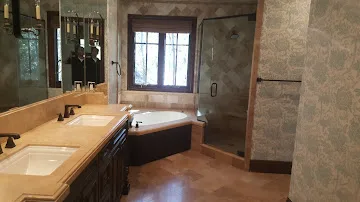
Travertine bathroom floor and vanity after cleaning

What we do

Cleaning and restoration are two different jobs.

Cleaning takes off what sits on the stone or in it: soil packed into open holes, dark grout, soap film, hard water, and old sealer haze. Restoration fixes the stone itself: refilling holes that have opened up, honing out etch marks and traffic wear, and resealing so the floor doesn't soak up the next spill.

A lot of floors only need the first. Some need both. The way to tell is to clean a test spot and look at what's left. If the dullness goes away with the dirt, you're done. If the surface is still rough or etched, that's honing, and if you want a shine back after that, it's travertine polishing.

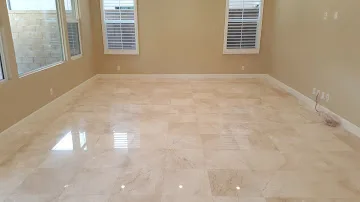
Restored travertine floor with an even finish in an empty bedroom
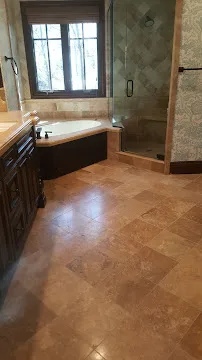
Travertine shower walls and floor after cleaning Travertine bathroom floor laid on the diagonal after cleaning

The difference

Why travertine gets dirtier than other tile.

Travertine forms around mineral springs, and gas bubbles leave holes all through the stone. Most interior travertine was filled at the factory, but that fill wears and shrinks over time. Every hole that opens up becomes a little pocket that catches mop water and dirt and doesn't let go.

It's also calcium-based, like marble. Vinegar, citrus, many bathroom sprays, and some grout cleaners eat the surface and leave dull spots that no amount of scrubbing will remove. A lot of the floors we see were made worse by the wrong cleaner, not by traffic.

The decision points

Know what the stone needs before anyone picks up a machine.

What we do on a travertine restoration

Deep clean the stone and grout

Stone-safe chemistry that won't etch the surface, given time to break down old residue, then a scrub and extraction to pull the slurry out of the holes and grout lines instead of spreading it around. Grout that stays dark after that may need its own attention, covered on our grout cleaning page.

Strip old sealer that has gone cloudy

Topical sealers and floor finishes that were rolled onto travertine tend to yellow, scratch, and trap dirt. If a previous product is sitting on the surface, it comes off before anything else happens, or the new sealer won't reach the stone.

Fill open holes

Open voids get filled with a color-matched filler so they stop collecting dirt. This is the step that makes a cleaned floor stay clean. More on how that works on our hole filling page.

Hone out etching and wear

Diamond honing takes the surface down past etch marks, scratches, and worn traffic lanes to fresh stone. It also flattens the fill so it sits level with the tile. Honed travertine has a smooth matte look that most people expect from the stone.

Seal with a penetrating sealer

Once the stone is clean and dry, we use a penetrating sealer that soaks into the travertine instead of leaving a plastic film on top. It slows stains down. It doesn't make the stone stain-proof, and it doesn't stop acid from etching it.

Outdoor travertine is a different problem

Travertine pool decks, patios, and entries deal with sun, sprinkler water, pool chemicals, and in some yards, white mineral deposits that work up out of the stone. Outdoor travertine is usually tumbled or unfilled on purpose, and it should not be polished to a shine because wet polished stone is slick. On exterior stone we focus on cleaning, clearing out organic growth, and a breathable sealer, and we talk through traction before choosing a finish. For the white powder, our write-up on efflorescence explains why it keeps coming back and why sealing over it doesn't fix the cause.

When cleaning is the right call, and when it isn't

Good candidates

Travertine that looks gray in the traffic lanes while the tiles are still tight, grout that won't come back with mopping, open holes full of dirt, dull or etched spots in kitchens and baths, and an old topical sealer or wax that has gone cloudy or yellow.

Not a cleaning job

Tiles that are loose, sound hollow, or are cracked straight across. That's an installation or subfloor problem, and cleaning won't fix it. Same for porcelain printed to look like travertine: it cleans differently and doesn't need stone restoration. If you're not sure which you have, a close-up photo usually settles it.

Learn your surface

The better you understand the material, the better it holds up.

Quick reads on how travertine cleaning and restoration actually works for orange county homes, before you spend money on the wrong fix.

Why vinegar ruins travertine

Filled versus unfilled travertine

Cleaning a test spot before quoting

When a floor needs honing, not scrubbing

Stripping old cloudy sealer

Outdoor travertine and traction

How we work

A clear plan before the machines come out.

01

Photos and a phone call

Send a wide shot of the floor, a close-up of the worst area, and a photo of the grout. We'll tell you what we think is going on and whether a visit makes sense.

02

Test spot

On site we clean a small area first. That shows whether the problem is dirt, sealer buildup, hard water, or etching, and it lets you see the likely result before you commit to the whole floor.

03

Clean, strip, and extract

We protect baseboards and cabinets, clean the stone and grout with stone-safe products, strip old topical sealer if there is one, and extract the dirty water so it doesn't dry back into the holes.

04

Fill and hone where needed

Open holes get filled. Etched or worn areas get honed. If the floor only needed cleaning, we skip this step and tell you so.

Orange County homes

Travertine cleaning for Orange County homes.

Travertine went into a lot of South County homes, especially in Mission Viejo, Ladera Ranch, Rancho Santa Margarita, and Coto de Caza: great rooms, entries, kitchens, master baths, and pool decks out back. Many of those floors are now on their second or third round of grout cleaning and have never had the holes refilled or the old sealer removed.

Near the coast in Newport Beach, Laguna Beach, and Dana Point, we see more shower and bathroom travertine fighting hard water and soap film, and patios that stay damp under the marine layer. Inland, sun and pool chemicals take more of a toll on exterior stone. We plan the cleaning and the sealer around where the stone is and how it gets used. Marble, limestone, slate, and Saltillo floors are covered on our stone tile cleaning page.

Restored travertine floor with an even finish

Questions

Straight answers before the estimate.

Can you clean travertine without damaging it?

Yes, as long as the cleaner is stone-safe. Travertine is calcium-based, so acidic products like vinegar, lemon, and many tub-and-tile sprays etch it. We use neutral and alkaline cleaners made for natural stone, and we test a spot before doing the whole floor.

Why does my travertine look dirty even right after I mop it?

Usually because dirt is packed into open holes and grout lines where a mop can't reach, or because an old topical sealer has gone cloudy and is holding grime in its surface. Mopping with the wrong product can also leave a film. A deep clean and extraction gets most of it out, and filling the open holes keeps it from coming back as fast.

What's the difference between travertine cleaning and travertine restoration?

Cleaning removes dirt, residue, and old sealer. Restoration also works on the stone: filling holes, honing out etching and wear, and resealing. We'll tell you after a test spot whether cleaning alone will get you where you want to be.

Do you fill the holes in travertine?

Yes. Open holes get a color-matched fill so they stop collecting dirt. On a floor with a lot of open holes, filling is often what makes the biggest visual difference after the clean.

Can you get etch marks out of travertine?

Etch marks are damage to the surface, not dirt, so cleaning won't remove them. Honing takes the surface down to fresh stone and removes most etching. Deep etching or a lot of it across a floor may need more honing passes.

Should travertine be sealed after cleaning?

Usually yes, with a penetrating sealer once the stone is completely dry. Sealing slows stains down. It doesn't stop acidic spills from etching, so wiping up wine, juice, and citrus quickly still matters.

Do you clean outdoor travertine pool decks and patios?

Yes. Exterior travertine gets cleaned and sealed with a breathable sealer, and we keep the finish low-sheen for traction around the pool. We don't polish outdoor travertine to a shine.

Is travertine cleaning the same as your stone tile cleaning service?

It overlaps. Our stone tile cleaning service covers every natural stone we work on, including marble, limestone, slate, and Saltillo. This page is about travertine, which brings its own issues: the holes, the factory fill, and how easily it etches.

Have a travertine cleaning and restoration project you are not sure about?

Send a photo. We will tell you what we see and whether it belongs on our schedule.