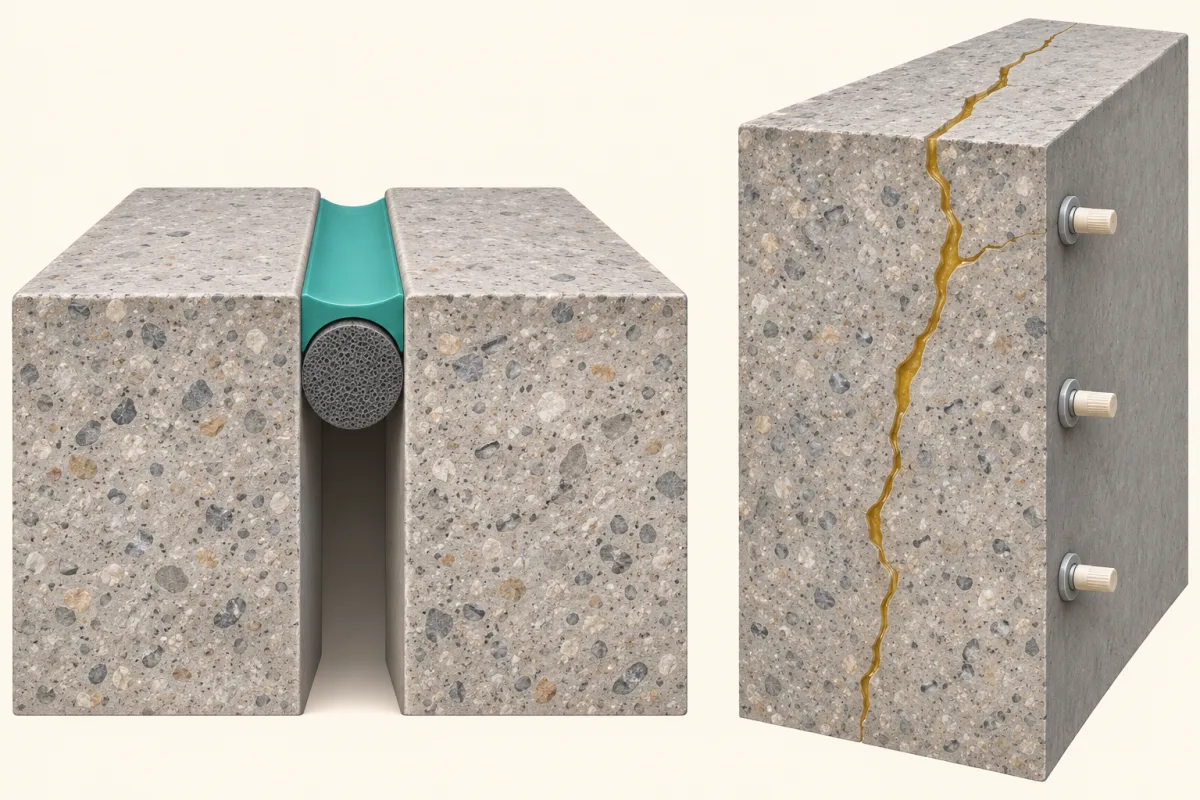
Yes, seal open concrete cracks before the rain if the slab on both sides of the crack is still level. Water that drains into a crack soaks and washes out the soil under the slab, and once that support is gone, a simple crack becomes a sinking, rocking panel. A flexible crack seal keeps the water on top. The exception is a crack where one side is already higher than the other, or the crack keeps getting wider. Sealing that one hides a support problem instead of fixing it.
Why water in a crack causes more damage
A crack by itself is mostly a looks problem. The trouble starts when it becomes a drain.
Every storm sends water down through the opening and into the base under the slab. That water does three things. It softens the soil so it can’t hold the slab up as well. It carries fine sand and silt away, leaving hollow spots. And on expansive clay, which a lot of OC neighborhoods sit on, it makes the ground swell in one spot and shrink in another, pushing the slab unevenly.
Weeds and efflorescence (that white chalky stain) tend to show up along cracks for the same reason: water is moving through them. The rest of the slab soaks up rain too, which is why crack sealing pairs well with a penetrating concrete sealer over the whole surface.
Near the coast there’s one more problem. Driveways with steel reinforcement in Newport Beach, Laguna, or San Clemente get water and salt air reaching the rebar through open cracks. Rusting steel expands and pops chunks of concrete off the surface. Patching the chip without stopping the water leaves the rust going. That kind of spalling is a concrete restoration repair, not a caulk job.
Which cracks to seal now
These are good candidates to seal before the next storm:
- A single crack wide enough to slip a credit card into, with both sides level.
- Control joints (the straight, evenly spaced grooves) where the old sealant has cracked, pulled away, or gone missing.
- The joint where the driveway meets the garage slab or where a patio meets the house, if the filler is gone.
- Cracks where you’ve noticed water sitting or running along the line during rain.
Which cracks need a closer look first
Hold off sealing and get the crack assessed if you see any of these:
- One side of the crack is higher than the other.
- The crack has grown since last season, or reopened after an earlier repair.
- Pieces are breaking off the edges, or there’s rust staining along the line.
- You can see soil washed out or a gap under the slab edge.
- The crack is on a pool deck near the coping.
A bead of sealant on any of those just covers the symptom. Something is usually moving or washing out underneath, and that needs to be fixed first.
How a crack seal should be done
A seal that lasts comes down to prep and the right material, not how much caulk goes in.
The crack gets cleaned out so the sealant has solid concrete to grab. Loose material, dirt, and old failed filler come out. Wider cracks and joints get a foam backer rod pushed in first. The rod sets how deep the sealant sits and keeps it from sticking to the bottom of the joint, so the bead can stretch side to side as the slab moves. Then a flexible sealant rated for exterior concrete and the traffic it’ll see goes on top.
Two things to skip: rigid mortar in a joint that’s supposed to move, and stacking new caulk over old caulk that’s already peeling. Both fail along the same line.
A sealed crack will still show as a line. Function and looks are separate goals, so if matching the color matters to you, ask to see a sample first. If you want the lines gone, concrete resurfacing puts a new surface over the repaired slab. Cracks that are still moving can show back through it, so the crack repair comes first.
Seal the slab, too
Crack sealant handles the openings. The rest of the surface still soaks up water. A penetrating sealer slows how much rain the slab itself absorbs, which helps with surface flaking, staining, and those fine hairline cracks that aren’t worth caulking one by one.
Can you do it while it’s still raining?
Usually not. Most crack sealants need a dry crack to bond. We explain the timing in can you seal concrete cracks when it’s wet. If your crack falls in the closer-look group, sinking concrete after heavy rain walks through what’s usually going on underneath, and why cracks come back through a concrete overlay covers what to sort out before resurfacing.
Not sure which group your crack falls into? The concrete crack checker takes about a minute. Or text us photos and we’ll tell you whether it’s a quick seal or a bigger repair.